
The Gas Well Road
There’s a natural gas well that’s on the road halfway to our house. The well operator is supposed to maintain their portion of the road but that’s only by guidance. There is no state regulation requiring maintenance. On the whole, well roads that we have seen have been in fair to poor condition. Most of the problems we have seen have been due only partially to design of the road. In most cases the poor state of well roads has been due to lack of maintenance.
That’s the problem with this operator’s section of the road. Their well tender uses the road to access the well at least once a week in a large truck, usually with an ATV sitting in the bed. Several times a year a much larger and heavier vac truck comes to remove fluids from the well’s tank. Other surface owners come out several times a year and we use the road with our ATV and UTV. Our vehicles are lightweight and are designed to do limited damage to a dirt or gravel road.
The previous operator in 2010 had a company come in and completely redo the badly deteriorated well road. The “new” road had decent ditches and drainage and a good bed of gravel. The road hasn’t received maintenance since then and it shows with several places having deep ruts (4 to 12 inches deep) and a pothole developing into a gully across the road at the well pad.
Below I have some photos that contrast the 2010 gas well road and its current condition. In some of the current photographs there’s a tape measure visible. The extended tape is 18 inches long for reference.
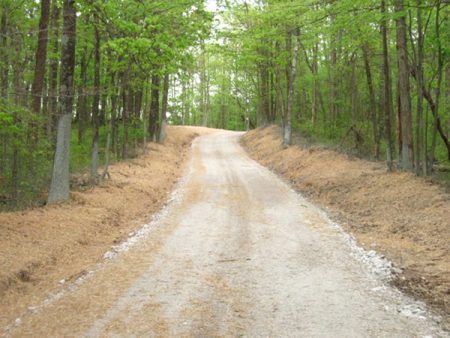
This is a view of the 2010 well road as it goes up a slope and where it turns to the right. Currently, the first bad pothole is on the left side of the road before the turn. It’s about 12 inches deep.
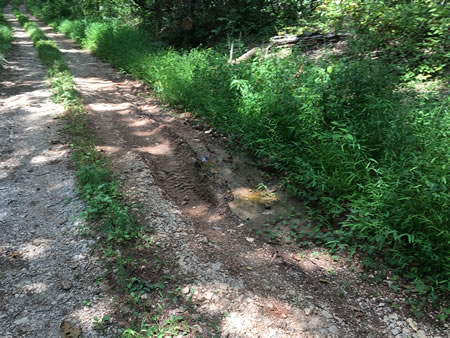
This photograph was taken in August 2025 looking down the slope. The pothole started as a single hole furthest to the edge. Now a second, slightly shallower, pothole has formed toward the center of the road.
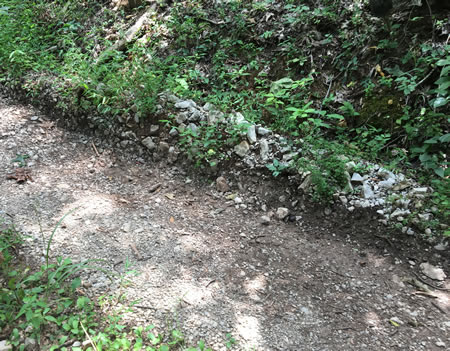
A common problem with gravel roads on clay is that use by heavy trucks compacts the roadbed. In some cases like here, the gravel is pushed upward at the edges blocking rainwater drainage to a ditch. Standing water on a gravel road leads to potholes, ruts, and other problems. The road at this area with the pothole on the edge has gravel pushed up and standing in places up to 12 inches above the road bed.
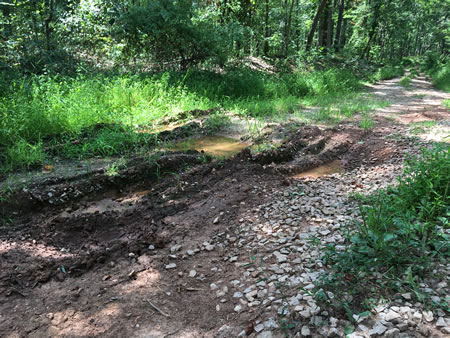
This and the three following photographs show the condition of the road at the turn. The gravel in the foreground was put down at the entrance drive to an owner’s property. The well road has shifted toward the drive as potholes and ruts became worse. The well road bed, as seen in the 2010 photo, is further to the left in this photo and extends into the grass.
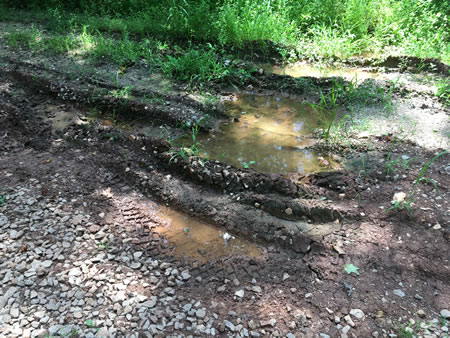
Here is another view of the ruts shown in the previous picture. The ruts toward the top of the photo are the deepest, about 12 inches. It hasn’t rained for weeks and they still hold water.
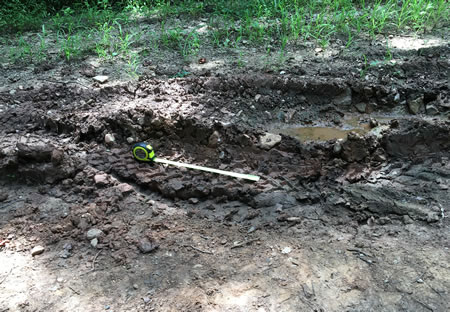
With an ATV and UTV we are able to bypass this bad area of the road by running on the uphill side where the neighbor has their drive.
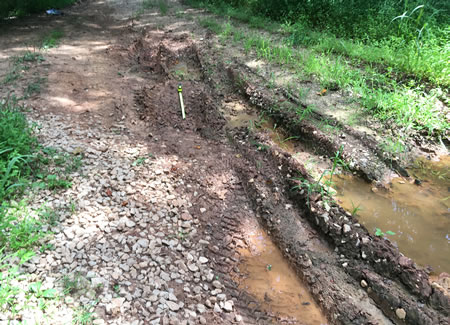
The ruts and potholes extend past the turn.
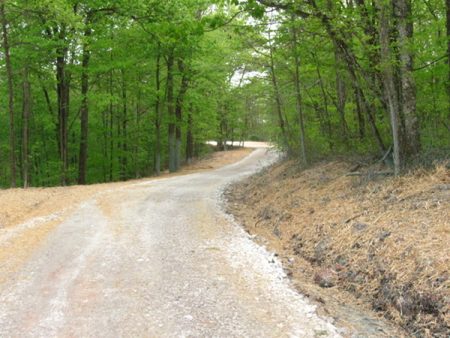
This is the 2010 view of the road past the turn.
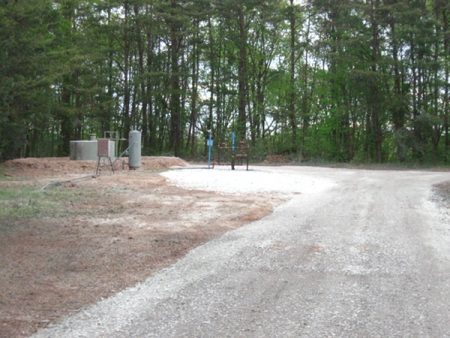
The well pad has always suffered from poor drainage. The current problem on the road at the pad is in the area of the road in the photo about a fourth from the bottom of the frame.
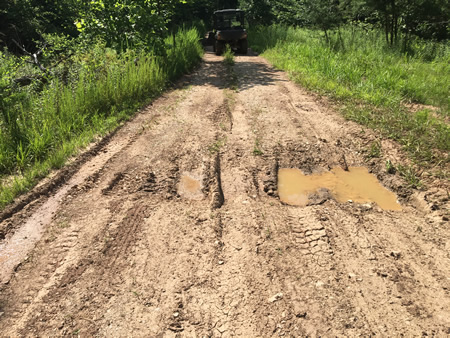
The 2010 photograph was taken looking south. This photo was taken looking north and shows the gully forming across the road. The deepest rut is about 12 inches. Vehicles currently tend to go partially off the road at the left to miss the deepest ruts. We are able to swerve around the gully to the right with our ATV and UTV.
The well road at this point will be much more expensive for the operator to repair. Periodic maintenance would have taken care of most of the issues seen 15 years after the road was constructed.
August 30, 2025