Gas Well Study

  • |

    The Gas Well Road

    There’s a natural gas well that’s on the road halfway to our house. The well operator is supposed to maintain their portion of the road but that’s only by guidance. There is no state regulation requiring maintenance. On the whole, well roads that we have seen have been in fair to poor condition. Most of the problems we have seen have been due only partially to design of the road. In most cases the poor state of well roads has been due to lack of maintenance.

    That’s the problem with this operator’s section of the road. Their well tender uses the road to access the well at least once a week in a large truck, usually with an ATV sitting in the bed. Several times a year a much larger and heavier vac truck comes to remove fluids from the well’s tank. Other surface owners come out several times a year and we use the road with our ATV and UTV. Our vehicles are lightweight and are designed to do limited damage to a dirt or gravel road.

    The previous operator in 2010 had a company come in and completely redo the badly deteriorated well road. The “new” road had decent ditches and drainage and a good bed of gravel. The road hasn’t received maintenance since then and it shows with several places having deep ruts (4 to 12 inches deep) and a pothole developing into a gully across the road at the well pad.

    Below I have some photos that contrast the 2010 gas well road and its current condition. In some of the current photographs there’s a tape measure visible. The extended tape is 18 inches long for reference.
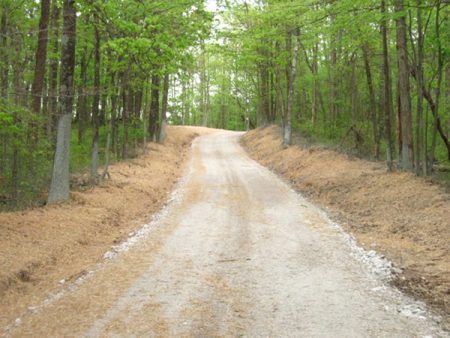
    View of 2010 work on well road.

    This is a view of the 2010 well road as it goes up a slope and where it turns to the right. Currently, the first bad pothole is on the left side of the road before the turn. It’s about 12 inches deep.
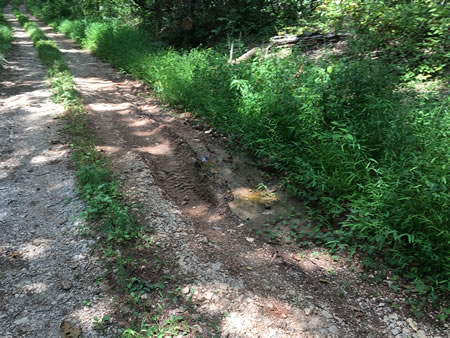
    2025 photograph of well road condition.

    This photograph was taken in August 2025 looking down the slope. The pothole started as a single hole furthest to the edge. Now a second, slightly shallower, pothole has formed toward the center of the road.
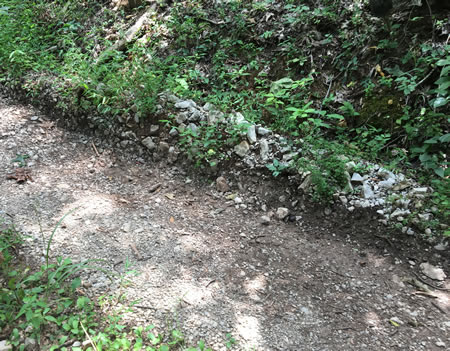
    2025 photograph showing well road condition.

    A common problem with gravel roads on clay is that use by heavy trucks compacts the roadbed. In some cases like here, the gravel is pushed upward at the edges blocking rainwater drainage to a ditch. Standing water on a gravel road leads to potholes, ruts, and other problems. The road at this area with the pothole on the edge has gravel pushed up and standing in places up to 12 inches above the road bed.
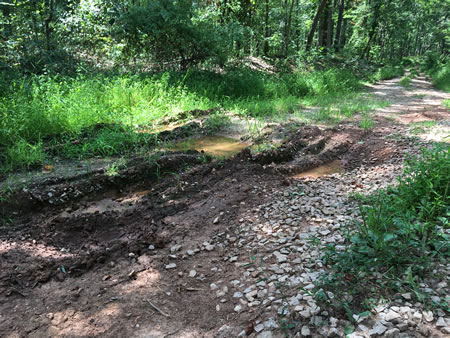
    2025 photograph of well road condition.

    This and the three following photographs show the condition of the road at the turn. The gravel in the foreground was put down at the entrance drive to an owner’s property. The well road has shifted toward the drive as potholes and ruts became worse. The well road bed, as seen in the 2010 photo, is further to the left in this photo and extends into the grass.
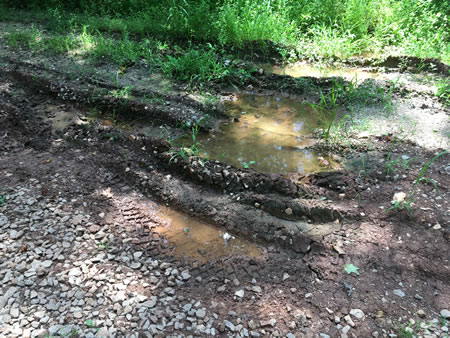
    2025 photograph of well road condition.

    Here is another view of the ruts shown in the previous picture. The ruts toward the top of the photo are the deepest, about 12 inches. It hasn’t rained for weeks and they still hold water.
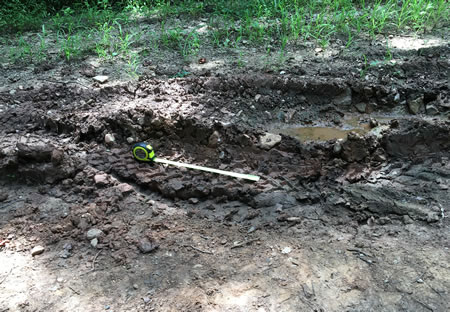
    2025 photograph of well road condition.

    With an ATV and UTV we are able to bypass this bad area of the road by running on the uphill side where the neighbor has their drive.
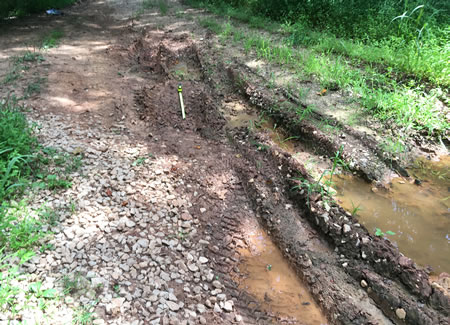
    2025 photograph of well road condition.

    The ruts and potholes extend past the turn.
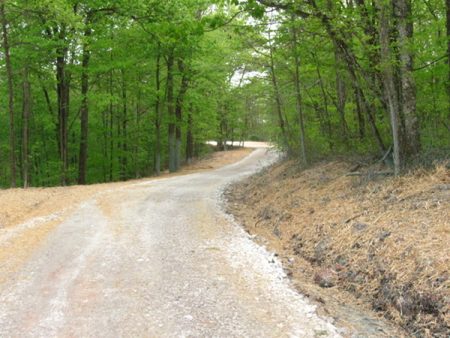
    2010 well road after construction.

    This is the 2010 view of the road past the turn.
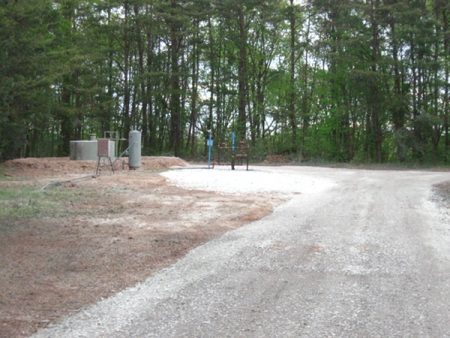
    2010 well road photo showing construction.

    The well pad has always suffered from poor drainage. The current problem on the road at the pad is in the area of the road in the photo about a fourth from the bottom of the frame.
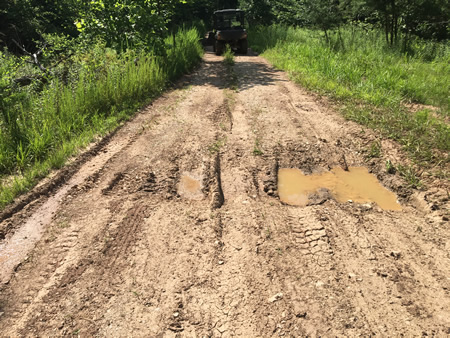
    2025 photograph of well road condition.

    The 2010 photograph was taken looking south. This photo was taken looking north and shows the gully forming across the road. The deepest rut is about 12 inches. Vehicles currently tend to go partially off the road at the left to miss the deepest ruts. We are able to swerve around the gully to the right with our ATV and UTV.

    The well road at this point will be much more expensive for the operator to repair. Periodic maintenance would have taken care of most of the issues seen 15 years after the road was constructed.

  • Another Spill at a Local Gas Well Storage Tank

    Natural gas wells, besides the natural gas they produce, create pollution. The most common pollution is errant and deliberate methane emissions. Just about every well we’ve looked at had a minor leak of some sorts. Sometimes the leak is audible from a distance as a hissing sound. Gas wells with storage tanks have vents to the atmosphere for methane and other gases. Some gas wells like this one have regular sizeable emissions as part of the plunger lift process for removing fluid from the deepest part of the production casing.

    The other type of pollution is created by the fluid brought, along with the natural gas, from underground formations. This fluid can be brine (one local well had brine with a salt concentration comparable to 4 pounds of table salt per gallon of water, see this permit page 7), can be petroleum (usually oil, some wells can produce a low octane gasoline), or a mixture of the two. This fluid is kept in storage tanks at the well site. The fluid is removed by a vac truck that sucks the fluid out of a tank. The brine is disposed of by underground injection in special class 2 wells. The oil is saved and sold. It costs money to dispose of brine so it easy to see how some natural gas producers are willing to fudge a bit, leaving a valve open on a vac truck leaking brine as the truck goes from well to well emptying tanks.

    The well where this spill from a tank happened has had previous spills. The well is in Kanawha county and we have written about it in the past. We made a YouTube video about another spill here and attempts at cleanup.

    State and in some cases federal regulations attempt to protect the environment with regulations regarding storage tanks. In West Virginia storage tanks need to be within secondary containment, a dike or other structure able to hold the contents of the tank in case of a catastrophic event. Since secondary containment can also hold rainwater there needs to be a mechanism or process to remove rainwater from the containment. Usually this is a pipe through the containment with a valve.

    West Virginia’s regulators have been confused about the requirements of secondary containment for double wall tanks, not following federal requirements and state regulation. So it’s not uncommon to find double wall tanks in West Virginia without secondary containment even though they don’t have overfill protection and the tanks are situated within feet of a stream. At the time we examined the federal regulations they did not exempt plastic double wall storage tanks from SPCC requirements for added secondary containment.

    This is the storage tank at 47-039-02026 and the stains from an overflow weeks earlier are still evident. The tank sits within an earth dike as its secondary containment. We’ve seen several problems with earth secondary containment. The walls erode over time. Deer and other animals going into the containment tend to follow a trail that ends up lowering the height of the secondary containment at that spot. At this well even though there is secondary containment, when there was a spill in the past, the fluids seeped through the base of the containment where the dike sits on the soil surface. There was no requirement for keying the dike to the soil during construction which would have prevented the fluid migrating on the heavily compacted clay soil surface through the less compacted soil used as the dike.

    The fluid appears to have overflowed from the trap door at the top of the tank, though most of the discoloration also appears to come from the seam where the top joins the double wall tank. The vertical pipe is the inlet source of fluids under pressure from the well or separator vessel. There are two capped fixtures to the right of the vertical pipe and these are for extraction of the fluids.

    In most cases tanks we have seen have not had their top hatches locked. The Chemical Safety Board has documented a number of cases where people have been killed or injured after climbing on top of tanks to see what the tanks hold. Emissions can be explosive. Sometimes people climb onto a tank which contains low octane gasoline or drip to use it to run farm equipment.

    The vent for this tank is on top, an open T pipe circled in red. It’s possible to have the tank emissions return to the production line by adding pressure but oil and gas companies feel that the cost is prohibitive even though the bill would be paid within a few years by increased production.

    This wasn’t a large spill so discoloration of the soil was limited to a foot from the edge of tank. Past spills have contaminated the soil so the salts are attractive to animals such as deer whose tracks are visible within the containment. Gas wells with their various spills create artificial salt licks for animals.

    We’ve checked this well periodically over the years and this is the first time we’ve seen the secondary containment drainage pipe’s valve closed. The previous time water from a rain was dripping out. We’ve not bothered to keep records of our visits so it’s not possible to be accurate for how long the valve was always seen open; we’ll say five years.